Return on investment
Weekly sales, up from $5,000
Purchases per week
Ad spend cost per purchase
NOTE: This case study was written after 5 months of using these leads and feeding them to the client’s Facebook Ad campaign. Since then, the campaign has achieved an ROI of more than 6,000%.
The client sells products from their website in a medical sector. The data detailed below is a result of the leads being fed into the Facebook Ad.
After 5 months of running the campaign, the client was able to increase ad spend cost which resulted in the data below. These results were 100% the:
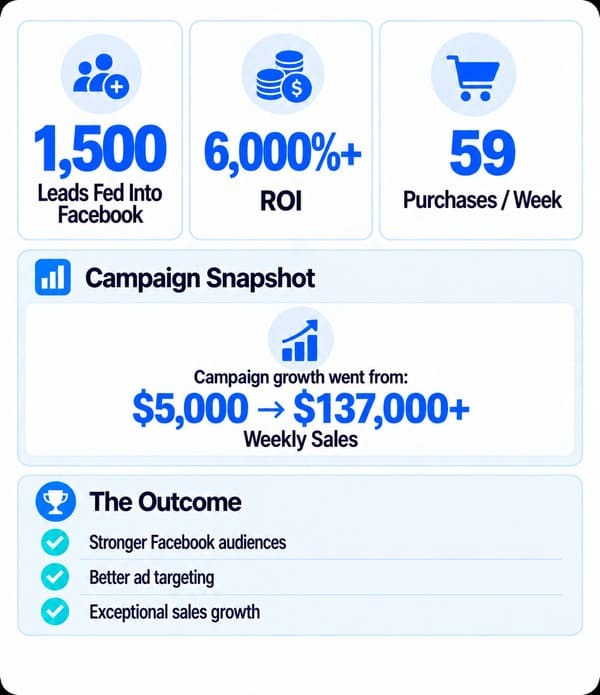
At the beginning of the campaign, we have to create a customer audience to feed in to Facebook’s algorithm. This audience is created directly from over 1,500+ leads that we feed into the Facebook set up campaign. From there, we continue to drip leads each week to strengthen the customer audience snapshot.
It is this process and our leads that make all the difference to the success of the campaign.
Just prior to the campaign start, the client was making $5,000 in weekly sales. At the end of 5 months, the Facebook ad campaign increased the weekly sales to more than $137,000.
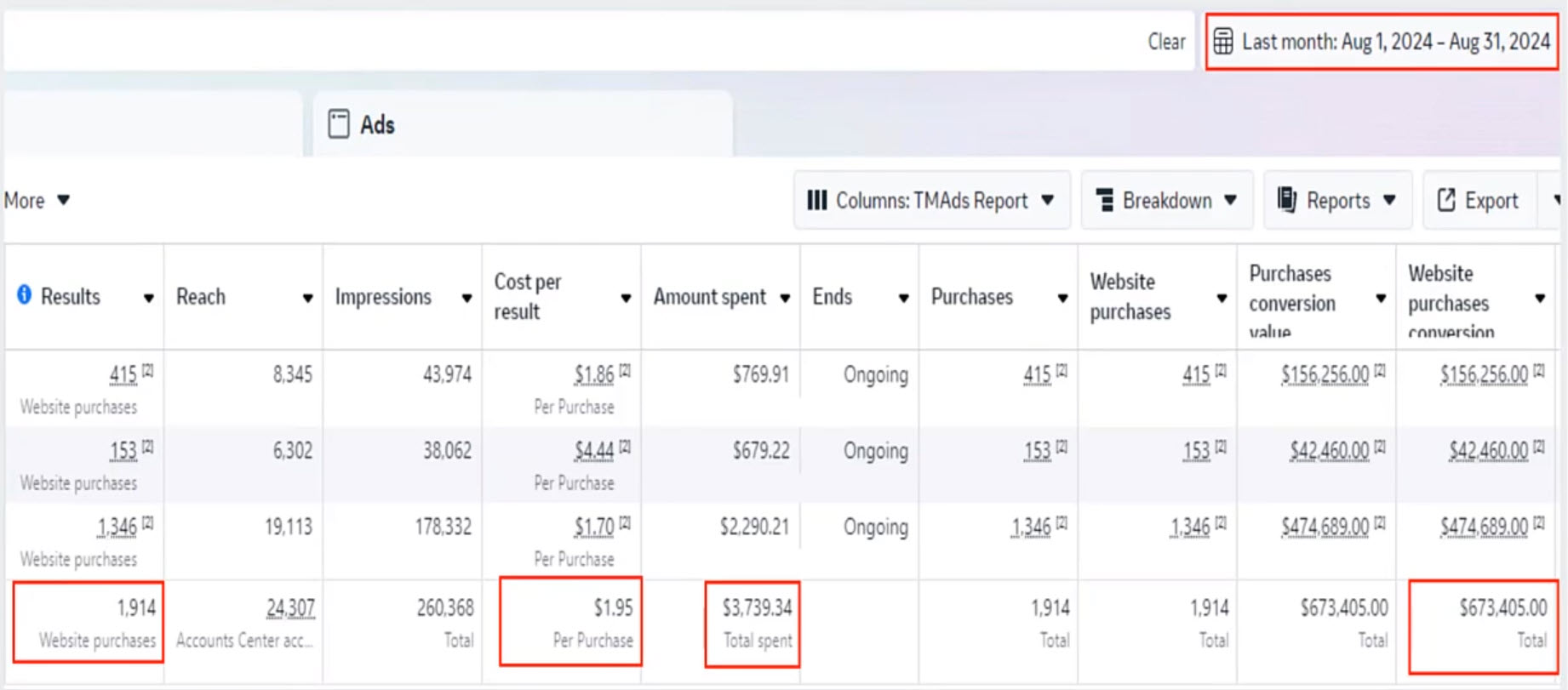
The screenshot above has been taken a few weeks later and covers the period of just 1 month (1st August 2024 to 31st August 2024).
The screenshot has been taken directly from the client’s Facebook Ads account dashboard.
The results shown of just $1.95 per purchase in a competitive sector like the health niche is remarkable. The results are all down to the high-quality leads that were fed into the Facebook algorithm when building the customer audience.
The company was already investing heavily in paid advertising and generating results but wanted to improve efficiency and achieve a stronger return from its existing marketing spend.
Rather than simply increasing ad budget, the goal was to improve the quality of the audiences being used for Facebook advertising by introducing highly relevant, intent-driven prospects.
The campaign used a combination of website visitor leads and search-intent leads.
These prospects were filtered against the company’s existing customer database to help reduce duplication, then added to Facebook audiences.
The company also used the lead data to create lookalike audiences, giving Facebook stronger signals about the type of people most likely to become customers.
ROI increase in the first month
Further increase over the next three months
Reported ROI after five months
Reported ROI a few weeks later
Higher-quality audience data → stronger Facebook targeting → dramatically improved campaign performance
A powerful example of how intent-driven lead data can complement an existing paid advertising campaign and help advertisers get significantly more value from the traffic they are already paying for.
As mentioned at the top of this page, a few months after reporting this case study, the client had achieved an ROI of more than 6,000%.